Tuesday, July 16, 2013

We haven't washed away...yet!

CSA Week 10: Still here, haven't washed away..yet!
We're growing for you! 

Trying to keep the weeds at bay.
We thank everyone for being a part of the Bluebird CSA farm membership and also for your additional purchases at the farmers' market and farm!

Box Fullness
Remember, your weekly vegetable boxes are based on a season average of either $20 or $25 per week for Small and Large vegetable shares, respectively.  Some weeks may be a bit less full than others.  This week’s boxes are quite full, but next week’s boxes may be under the average size. 
Tomatoes are coming soon!  The plants look great and are loaded with fruit- it’s just still green.  They are late due to cold weather back in May and the lack of sunshine.
 We can't be around to farm without your support.  Thanks for the continued support! Please consider becoming a member of the 8 week Fall CSA in October and November. See an overview below.


~~~~~~~~~~~~~~~~~~~~
Fall CSA Vegetable Boxes
Become a Member

Look for an official Fall CSA (Community Supported Agriculture) email and signup link in the next few days.  The Fall CSA is 8 weeks long and runs from October 2nd until November 20th.  Pickup on Wednesdays in Hickory or Morganton.  Fall CSA boxes are a little bit smaller than our full season CSA boxes and  cost $120 for 8 weeks. ($15 week average)
Here's an example Fall CSA box.
1 kale bunch
1 Swiss chard bunch (or tender baby collards)
1 head of lettuce
1 bag of arugula
1 bunch radishes (or 1 bunch of herbs)
plus a few others...
Other Possible Vegetables that may be included
Hawkerai turnips
sweet potatoes
tomatoes
sweet bell peppers
carrots
beets
scallions
Look for a CSA signup email in the next few days.
 ~~~~~~~~


Farm news
We had a scare with Friday night’s storm.  The pounding rain came down as loud as hail and totaled 3 inches in 2 hours.  I was sure the fruit laden peppers were snapped in half.  They are not snapped, but they are bent sideways a few inches from the ground.  We’re pretty sure they will survive with a few setbacks.

Weather challenges are always huge obstacles for farmers. 
Garden and pasture
What is more disheartening than weather challenges  is to have losses from weather, harvest what you have left in the fields, and then not sell the harvested vegetables at the Farmers' Market.  That’s why you, our CSA members are so important to us! We know you are there for us! We’re growing for you!
We haven't had any severe damages with the flooding and wet weather (no floating cars or animals or completely wiped out plants), but many plants have been struggling and not producing well  (lettuce, tomatoes, peppers, squash, eggplant, potatoes, basil)  That's because it's been cool and the field has been flooded or saturated with water.  (roots don't like to drown.)

This is for all you out there that have wanted to know the details..We don't want to sound negative, but here's a bit of the damage in the vegetable field.  The water table is at the surface of the field for the 7th?(stopped counting) time.  This means there are small ponds and standing water in many places.  The squash blossoms have rotted on the plants. The bell peppers plants are alive but toppled over almost to the ground.  Some potatoes have rotted in the ground.  The weeds are ferocious and grow 3 inches a week.  Some beans plants and cucumbers plants are rotting at the base of their stems.  The pigs are happy "as a pig in mud," but we are keeping them moving around the farm into new paddocks so they don't make mud bricks!

baby cucumbers


The Positive Side...
We'll have some beautiful tomatoes and peppers if the plants can handle the weather stress.  We currently have beautiful cucumbers. Beautiful!  Beets aren't a sexy vegetable like a tomato. They just aren't natural divas like tomatoes are.  But we have some very handsome beets.  Very sweet tasting and good-natured beets for you to enjoy

And...We've got our packets of amazing organic seeds, the organic fertilizer, and a positive outlook on beautiful fall vegetables.  More kale, Swiss chard, lettuce, radishes, Hakerai turnips, carrots, beets, arugula, and scallions.  And hopefully peppers and tomatoes will produce well all the way into the end of September.  Sweet potatoes should be making an entrance around the 3rd week of September.

baby squash

baby dill

baby scallions

baby lettuce

beets, in the "wild"

Sweet potato jungle

edamame beans!

So green for July!


Here's to fine summer farm eating! 
Farm Fresh Harvest
(Garlic correction from last week…there was no garlic last week)
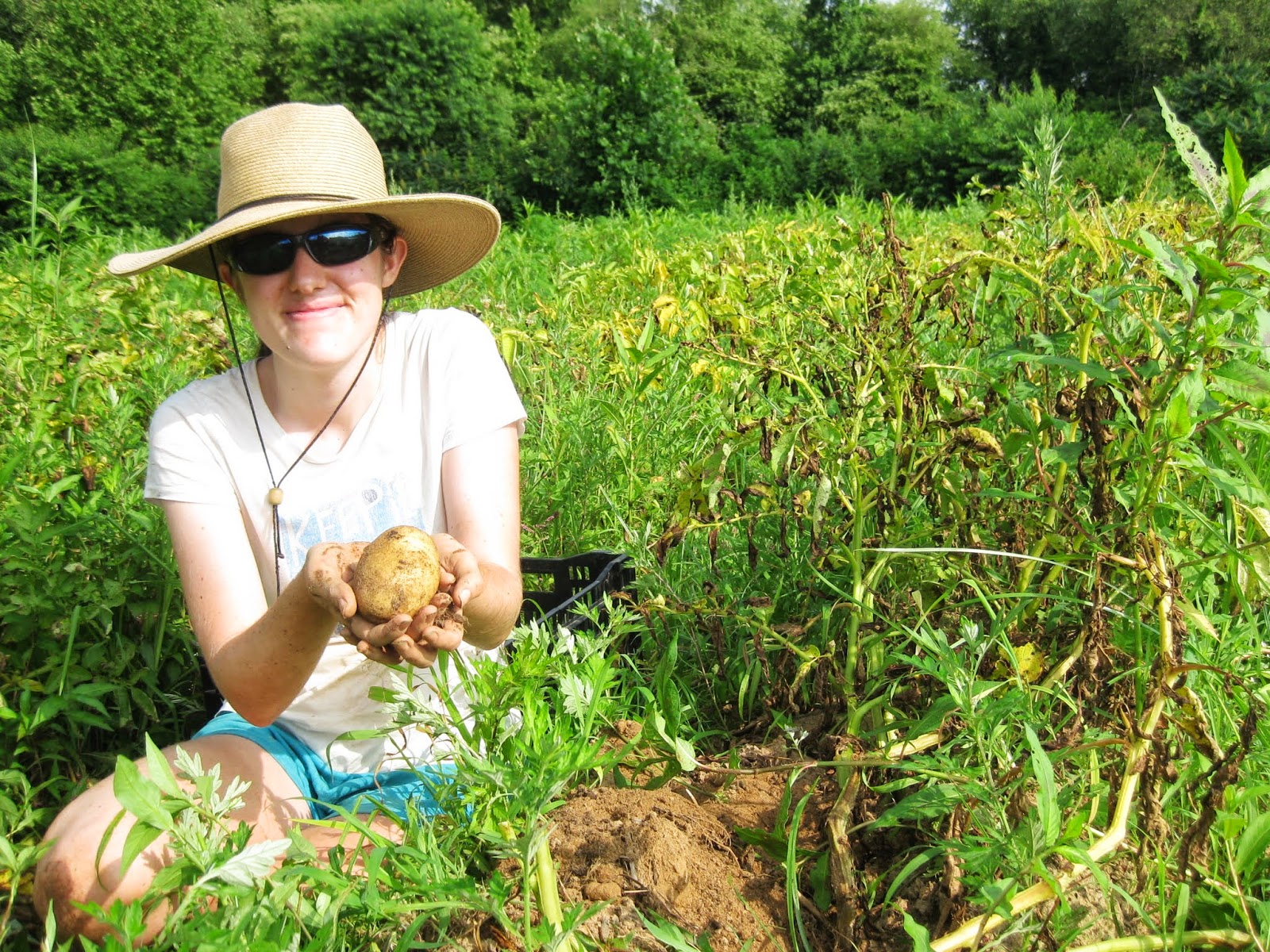
Bell peppers- Here’s a few more for you!  The peppers are slowly catching up.  Potatoes- King Harry. A white fleshed, all-round boiling, roasting, au gratin potato with a pleasant flavor.  These taters have been dried/cured for a short while in the barn, so they will keep for a medium length…2-4 weeks. Store them in the fridge.  You won’t get any potatoes next week.  This variety does well in the South; it’s resistant to Colorado Potato Beetle- a major pest.  
Beets- Beautiful Beets! This is our best crop of beets ever. Beets can be a love ‘em or hate ‘em crop.  You should love ‘em.  Their earthy flavor has sweet notes to it.  Try the Gingered Beets recipe.  Try my Orange Marinated Beet Salad recipe below.  It’s tasty!
Carrots- Mmmm. These tasty garden carrots are the last ones! We’ve harvested them all!
Summer squash and Zucchini- We are still waiting on a younger planting of squash and zucchini to come into production.  Enjoy the moderate amount of fruit- once the plants start producing they go all out!
Cucumbers- The smell of summer! They are really cranking out some tasty fruit. It is a beautiful patch of plants.  Cucumbers come in all shapes and sizes.  We grow little mini cucumbers, large crisp American slicers, and delicate slender European cucumbers.
Scallions- Scallions are a spring or green onion.  Eat the white stalk and the green leaves! They add a sweet, mild onion flavor to any dish! Great raw or substitute a few scallions for a big onion in cooking.

Recipes
Cool as a cucumbers: 10 Fresh Recipes for Summer
     -from www.Thekitchn.com

Fresh Gingered Beets
Adapted from The Passionate Vegetarian, 2002.

Basic Cooking Method
  1. Wash beets well. Cut off and discard root tails and all except 1 inch of stems.  Do not peel.  Cook, covered in lightly salted boiling water for 40 to 50 minutes or until just tender. Drain.  Let cool until easy to handle.
  2. Slip skins off beets under running water.  Carefully slice each beet into 1/4 inch thick slices, removing and discarding remaining stem ends.
Once the beets are sliced, you may splash them with a bit of olive oil and store for about 2 days before using or creating them into a dish.  I like to store beets in Mason jars, so they don’t stain the Tupperware.
1 bunch of beets (approx 5 large beets or 10 golf ball size beets)
1 teaspoon butter
1 teaspoon vegetable oil
1-2 teaspoons finely diced ginger
3 tablespoons brown sugar
2 tablespoons water

Recipe:                                                                                                     
  1. Heat 1 teaspoon each butter and oil in a large nonstick skillet over medium heat.  When the oils are sizzling hot, add the cooked beets and toss them in the hot fat. 
  2. Then add 1 to 2 teaspoons peeled very finely dice ginger.  Toss for about 30 seconds.
  3. Then add 3 tablespoons brown sugar and 2 tablespoons water.  Cook, stirring, until the water and brown sugar have bubbled into a glaze, about 30 seconds.


Orange-Beet Salad
From Better Homes and Gardens annual Recipes 2001
Marie’s notes: I used olive oil instead of walnut oil and plain chevre instead of feta cheese. I also omitted the orange peel (the peel of conventional citrus have a high concentration of pesticides) and used 1 extra tablespoon of orange juice.
Tip: Roll the plain goat chevre or feta cheese in a black pepper and thyme mixture (coat the cheese in herbs)  to keep the red juice of the beets from staining the cheese.  I let the beets marinate overnight in the dressing, drained the beets, and then topped the beets with the walnuts and cheese on the dinner plates.   It was delicious!

3 medium beets (about 9 oz)
3 Tbsp. walnut oil or salad oil
1 tsp. shredded orange peel
2 Tbsp. orange juice
1 Tbsp. white wine vinegar or white vinegar
2 Tbsp. broken walnuts toasted
3 Tbsp crumbled feta cheese
¼ coarsely ground pepper
  1.  Wash beets well. Cut off and discard root tails and all except 1 inch of stems.  Do not peel.  Cook, covered in lightly salted boiling water for 40 to 50 minutes or until just tender. Drain.  Let cool until easy to handle.
  2. Slip skins off beets under running water.  Carefully slice each beet into 1/4 inch thick slices, removing and discarding remaining stem ends.
  3. Meanwhile, for dressing, in a screw-top jar combine walnut oil or salad oil, orange peel, orange juice, and vinegar.  Cover and shake well.
  4. In a medium mixing bowl gently toss the beet slices with the dressing. Cover, and chill to marinade for 2 to 24 hours. 
  5. To serve, let mixture come to room temperature. Gently stir walnuts into beets. Sprinkle with feta cheese and pepper. Makes 4 servings.

Roasted Carrot Stick Snack
Best when served hot out of the oven, these healthful substitutes for French fries are loaded with vitamin A.
6 medium carrots (1 lb.)
2 to 3 tsp olive oil
2 Tbsp. snipped fresh or dried dillweed or basil
Coarse sea salt or salt

1. Preheat oven to 475F.  Peel carrots.  Cut carrots into strips about 3 inches long and ½ inch wide.
2.  In a large bowl combine olive oil and snipped dillweed or basil.  Add carrots; toss to coat.
3.  In a 15x10x1 inch baking pan spread carrots in a single layer.  Roast, uncovered, about 10 minutes or until carrots are just tender, stirring once.  Sprinkle with coarse salt.  Makes 6 side dish or snack servings. 


Cucumber yogurt salad
            Wash cucumbers well.  Finely slice, dice, or grate cucumber.  Mix with plain yogurt (greek style yogurts are particularly good for this recipe).  Add as much yogurt as you prefer.  This salad can range from being almost purely cucumbers with a yogurt dressing to a bowl of yogurt with some cucumbers in it.  Salt to taste. 

Add fresh flavor. Try adding dill, crushed garlic, diced spring onion, parsley, or another of your favorite herbs. 

Creamy Cucumber Soup
From EatingWell:  May/June 2007
There's no reason to only use cucumbers raw—they are wonderful sautéed then pureed with avocado for a silken-textured soup that's good warm or cold.
4 servings, about 1 cup each | Active Time: 35 minutes | Total Time: 35 minutes
Ingredients
  • 1 tablespoon extra-virgin olive oil
  • 2 cloves garlic, minced
  • 1 small onion, diced
  • 1 tablespoon lemon juice
  • 4 cups peeled, seeded and thinly sliced cucumbers, divided
  • 1 1/2 cups vegetable broth, or reduced-sodium chicken broth
  • 1/2 teaspoon salt
  • 1/4 teaspoon freshly ground pepper
  • Pinch of cayenne pepper
  • 1 avocado, diced
  • 1/4 cup chopped fresh parsley, plus more for garnish
  • 1/2 cup low-fat plain yogurt
Preparation
  1. Heat oil in a large saucepan over medium-high heat. Add garlic and onion; cook, stirring occasionally, until tender, 1 to 4 minutes. Add lemon juice and cook for 1 minute. Add 3 3/4 cups cucumber slices, broth, salt, pepper and cayenne; bring to a simmer. Reduce heat and cook at a gentle simmer until the cucumbers are soft, 6 to 8 minutes.
  2. Transfer the soup to a blender. Add avocado and parsley; blend on low speed until smooth. (Use caution when pureeing hot liquids.) Pour into a serving bowl and stir in yogurt. Chop the remaining 1/4 cup cucumber slices. Serve the soup warm or refrigerate and serve it chilled. Just before serving, garnish with the chopped cucumber and more chopped parsley, if desired.
Nutrition
Per serving : 173 Calories; 12 g Fat; 2 g Sat; 8 g Mono; 2 mg Cholesterol; 15 g Carbohydrates; 4 g Protein; 5 g Fiber; 494 mg Sodium; 544 mg Potassium
1 Carbohydrate Serving
Exchanges: 1 vegetable, 2 fat
Tips & Notes
  • Make Ahead Tip: Refrigerate for up to 4 hours.

Cold Cucumber Soup
Ingredients
  • 3  medium seedless cucumbers, peeled and chopped
  • 3/4  cup(s) thinly sliced green onions
  • 1  tablespoon(s) lemon juice
  • 1  teaspoon(s) lemon zest
  • 1  teaspoon(s) sea salt
  • 1/2  teaspoon(s) freshly ground pepper
  • 1 1/2 cup(s) vegetable broth
  • 1/2  cup(s) sour cream
Directions
  1. Place cucumbers, green onions, lemon juice, lemon zest, sea salt, pepper, and vegetable broth in a blender or food processor and puree.
  2. Stir in sour cream and chill until very cold, about 1 hour.
  3. Serve topped with additional chopped cucumber, green onion, and lemon zest.
http://www.countryliving.com/recipefinder/cold-cucumber-soup-recipe

We're growing for you! 

Wednesday, July 3, 2013

CSA Harvest Week 8: Beets, Carrots, Lettuce Mix- Oh my!

  
Saladnova
You’ll find a nice big bag of premium salad mix in your box today. This planting of lettuce was a bit of a gamble. Usually it is too hot to harvest good tasting lettuce, but this planting is delicious.  The salad mix blend is called Saladnova, and it is a fine blend of lofty, crunchy, and buttery types of lettuce.  You will notice that the lettuce is a bit wet.  (You guessed it- the weather) Please spin the lettuce in a salad spinner and put back into its bag…or…place a couple of pieces of paper towels in the back to help absorb the moisture.  Store the bag tied shut and eat within this week.

Juggling and Gambling
We’re going to attempt to grow early fall lettuce (harvest early September). You won’t get to eat it for 65-75 days from now. That seems like a lot of days, but lettuce is one of the quickest growing crops.  Most crops take 90-120 days.
The lettuce may not succeed either.  It will have challenges.  It will take us about 6 or 7 hours of work to pamper the lettuce along throughout the following months. Why am I telling you this? This special lettuce is unusual in that there even a remote possibility of germination in the beginning of July! The lettuce will take all of July and August to grow before it is ready to eat.  Before that this lettuce will have to overcome several challenges to survive to harvest during those months.  It needs cool soil temperatures to germinate (sprout), plenty of water (difficult to do in most hot summers), and temperatures below 87 degrees.
So even though we are struggling with the heat loving summer crops with all of the cool rainstorms, we have an opportunity to try to grow and reap a special crop for you !

Farm Fresh Harvest

Saladnova lettuce mix-  Special summer crop
Beets- Beautiful Beets! This is our best crop of beets ever. You’ll get more bunches in the weeks to follow. Once you get a planting of beets growing strong, it is a beautiful sight to behold.  Their magenta stems and burgundy leaves march in straight rows right down the bed. (Pictures don’t do the sight justice.) Beets can be a love ‘em or hate ‘em crop.  But try my Orange Marinated Beet Salad recipe below.  It’s tasty!
Carrots- Mmmm. These gems are very tasty raw.  If you are going to cook them, cook them lightly.  These aren’t your grocery store carrots. Our carrots are not storage carrots- they are fresh eating carrots.  Check out the Roasted Carrot Stick Snack Recipe below.
Summer squash and Zucchini- We are still waiting on a younger planting of squash and zucchini to come into production.  Enjoy the moderate amount of fruit- once the plants start producing they go all out!
Cucumbers- The smell of summer! They are really cranking out some tasty fruit. It is a beautiful patch of plants.  Cucumbers come in all shapes and sizes.  We grow little mini cucumbers, large crisp American slicers, and delicate slender European cucumbers. Note: Critters are eating the younger cucumber plants that should produce in August. We are trying to outsmart and scare them away.
Scallions- Scallions are a spring or green onion.  Eat the white stalk and the green leaves! They add a sweet, mild onion flavor to any dish! Great raw or substitute a few scallions for a big onion in cooking.
Red Russian Kale- Try this kale sautéed with the green onions. Sautee some zucchini or squash separately (I’d add some chopped green onion tops in the last 30 of cooking to the squash as well).  The two vegetables dishes complement each other quite well on the same plate.

Recipes
Remember, you can look at past articles from the CSA blog for recipes from previous newsletters.

Orange-Beet Salad
From Better Homes and Gardens annual Recipes 2001
Marie’s notes: I used olive oil instead of walnut oil and plain chevre instead of feta cheese. I also omitted the orange peel (the peel of conventional citrus have a high concentration of pesticides) and used 1 extra tablespoon of orange juice.
Tip: Roll the plain goat chevre or feta cheese in a black pepper and thyme mixture (coat the cheese in herbs)  to keep the red juice of the beets from staining the cheese.  I let the beets marinate overnight in the dressing, drained the beets, and then topped the beets with the walnuts and cheese on the dinner plates.   It was delicious!

3 medium beets (about 9 oz)
3 Tbsp. walnut oil or salad oil
1 tsp. shredded orange peel
2 Tbsp. orange juice
1 Tbsp. white wine vinegar or white vinegar
2 Tbsp. broken walnuts toasted
3 Tbsp crumbled feta cheese
¼ coarsely ground pepper
1.      Wash beets well. Cut off and discard root tails and all except 1 inch of stems.  Do not peel.  Cook, covered in lightly salted boiling water for 40 to 50 minutes or until just tender. Drain.  Let cool until easy to handle.
2.     Slip skins off beets under running water.  Carefully slice each beet into 1/4 inch thick slices, removing and discarding remaining stem ends.
3.     Meanwhile, for dressing, in a screw-top jar combine walnut oil or salad oil, orange peel, orange juice, and vinegar.  Cover and shake well.
4.     In a medium mixing bowl gently toss the beet slices with the dressing. Cover, and chill to marinade for 2 to 24 hours. 
5.     To serve, let mixture come to room temperature. Gently stir walnuts into beets. Sprinkle with feta cheese and pepper. Makes 4 servings.

Roasted Carrot Stick Snack
Best when served hot out of the oven, these healthful substitutes for French fries are loaded with vitamin A.
6 medium carrots (1 lb.)
2 to 3 tsp olive oil
2 Tbsp. snipped fresh or dried dillweed or basil
Coarse sea salt or salt

1. Preheat oven to 475F.  Peel carrots.  Cut carrots into strips about 3 inches long and ½ inch wide.
2.  In a large bowl combine olive oil and snipped dillweed or basil.  Add carrots; toss to coat.
3.  In a 15x10x1 inch baking pan spread carrots in a single layer.  Roast, uncovered, about 10 minutes or until carrots are just tender, stirring once.  Sprinkle with coarse salt.  Makes 6 side dish or snack servings. 


Cucumber yogurt salad
            Wash cucumbers well.  Finely slice, dice, or grate cucumber.  Mix with plain yogurt (greek style yogurts are particularly good for this recipe).  Add as much yogurt as you prefer.  This salad can range from being almost purely cucumbers with a yogurt dressing to a bowl of yogurt with some cucumbers in it.  Salt to taste. 

Add fresh flavor. Try adding dill, crushed garlic, diced spring onion, parsley, or another of your favorite herbs. 

Creamy Cucumber Soup
From EatingWell:  May/June 2007
There's no reason to only use cucumbers raw—they are wonderful sautéed then pureed with avocado for a silken-textured soup that's good warm or cold.
4 servings, about 1 cup each | Active Time: 35 minutes | Total Time: 35 minutes
Ingredients
  • 1 tablespoon extra-virgin olive oil
  • 2 cloves garlic, minced
  • 1 small onion, diced
  • 1 tablespoon lemon juice
  • 4 cups peeled, seeded and thinly sliced cucumbers, divided
  • 1 1/2 cups vegetable broth, or reduced-sodium chicken broth
  • 1/2 teaspoon salt
  • 1/4 teaspoon freshly ground pepper
  • Pinch of cayenne pepper
  • 1 avocado, diced
  • 1/4 cup chopped fresh parsley, plus more for garnish
  • 1/2 cup low-fat plain yogurt
Preparation
1.     Heat oil in a large saucepan over medium-high heat. Add garlic and onion; cook, stirring occasionally, until tender, 1 to 4 minutes. Add lemon juice and cook for 1 minute. Add 3 3/4 cups cucumber slices, broth, salt, pepper and cayenne; bring to a simmer. Reduce heat and cook at a gentle simmer until the cucumbers are soft, 6 to 8 minutes.
2.     Transfer the soup to a blender. Add avocado and parsley; blend on low speed until smooth. (Use caution when pureeing hot liquids.) Pour into a serving bowl and stir in yogurt. Chop the remaining 1/4 cup cucumber slices. Serve the soup warm or refrigerate and serve it chilled. Just before serving, garnish with the chopped cucumber and more chopped parsley, if desired.
Nutrition
Per serving : 173 Calories; 12 g Fat; 2 g Sat; 8 g Mono; 2 mg Cholesterol; 15 g Carbohydrates; 4 g Protein; 5 g Fiber; 494 mg Sodium; 544 mg Potassium
1 Carbohydrate Serving
Exchanges: 1 vegetable, 2 fat
Tips & Notes
  • Make Ahead Tip: Refrigerate for up to 4 hours.

Cold Cucumber Soup
Ingredients
·         3  medium seedless cucumbers, peeled and chopped
·         3/4  cup(s) thinly sliced green onions
·         1  tablespoon(s) lemon juice
·         1  teaspoon(s) lemon zest
·         1  teaspoon(s) sea salt
·         1/2  teaspoon(s) freshly ground pepper
·         1 1/2 cup(s) vegetable broth
·         1/2  cup(s) sour cream
Directions
  1. Place cucumbers, green onions, lemon juice, lemon zest, sea salt, pepper, and vegetable broth in a blender or food processor and puree.
  2. Stir in sour cream and chill until very cold, about 1 hour.
  3. Serve topped with additional chopped cucumber, green onion, and lemon zest.
http://www.countryliving.com/recipefinder/cold-cucumber-soup-recipe


Tuesday, June 25, 2013

Week 7: Golden Potatoes and Heirloom Garlic

Check out some other farm pictures on the main Bluebird Farm blog. http://bluebirdfarmnc.blogspot.com/


Hens love clover in their pastures!
  Thank you for bringing back your empty boxes so we can reuse them!~

Yukon Gold- It is new potato time!  A new potato is any potato that has been harvested before it has mature skin. Never peel the skin of a new potato! It is very tender! (Even if it is a big or giant potato- as long as the potato is young and its skin is delicate, it is a new potato.)You don’t need to refrigerate these new potatoes if you are going to eat them within a week or so.  Make sure to keep the bag open on top, so the potatoes can breathe and moisture won’t build up.
This week’s potato variety is Yukon Gold.  This variety is famous for its golden, moist flesh and mild, sweet flavor.  Cook it anyway you like- it is great boiled, roasted, fried, or baked.
Try adding chopped scallions to a potato salad for perfect onion flavor without the bite of a big storage onion.


Farm Fresh Harvest
Potatoes- Yukon Gold variety.  These are tender skinned new potatoes. (A new potato is a young, immature potato with delicate skin)
Parsley- Parsley and roasted potatoes, anyone?
Heirloom garlic-   Keep it on the counter…not in the fridge.  It’s one of the crops that makes our farm unique.  Heirloom garlic has been grown for flavor!  This week’s garlic is fresh heirloom garlic- different complex flavors will develop over several weeks as it cures and dries. 
Garlic in the grocery store has been bred for 2 things: storage and peeling. Much of the garlic in the grocery store was grown in China.

Beautiful potatoes!


Summer squash and Zucchini-  There is still not quite a whole load of squash and zucchini, but there is just enough for your boxes.  We’ve selected the most tender and delicate fruit for your box.
Cucumbers- Here come the cucumbers.  They are really cranking out some tasty fruit. Cucumbers come in all shapes and sizes.  We grow little mini cucumbers, large crisp American slicers, and delicate slender European cucumbers.
Scallions- Scallions are a spring or green onion.  Eat the white stalk and the green leaves! They add a sweet, mild onion flavor to any dish! Great raw or substitute a few scallions for a big onion in cooking.
Curly Kale-  Best for kale chips! Also great raw in a salad… chop finely, marinate with balsamic vinegar for 10 minutes, and add to a salad.
Swiss chard- Rainbow swiss chard.  I enjoy it just barely wilted down. I usually use about 2 tablespoons of butter to sauté a large onion and the stems and then add an entire bunch of chard. (sautéed until bright green) Adds color and dark healthy green to any dish.  We use in place of spinach in many dishes-in a tomato sauce, in omelets and quiches, or just sautéed with onions and served as a side.

William planting baby cucumbers.  Mature cucumber plants are on the left side.
Recipes
Remember, you can scroll down to look at previous blog articles for recipes from previous weeks. 

Cucumber yogurt salad
            Wash cucumbers well.  Finely slice, dice, or grate cucumber.  Mix with plain yogurt (greek style yogurts are particularly good for this recipe).  Add as much yogurt as you prefer.  This salad can range from being almost purely cucumbers with a yogurt dressing to a bowl of yogurt with some cucumbers in it.  Salt to taste. 

Add fresh flavor. Try adding dill, crushed garlic, diced spring onion, parsley, or another of your favorite herbs. 

Auntie Bonnie’s Potato Cucumber Salad
From the cookbook, How it all Vegan, 1999.
This tangy, tart salad will tickle your tastebuds.

2-3 cups new potatoes, cubed
1 tbsp fresh dill, chives or parsley, chopped (you can used green onions)
1 tbsp Dijon mustard
2 tbsp red wine vinegar
1 tbsp prepared horseradish
¼ cup flax oil (or your choice of salad type oil)
¼ tsp salt
¼ tsp pepper
2-3 cups cucumber, cubed
In a medium pot, boil the cubed potatoes in water until they can be pierced easily with a fork.  In a small bowl, whisk together the chosen herb, mustard, vinegar, horseradish, oil, salt, and pepper.  Set aside.  Once the potatoes are done, drain and rinse under cold water until cool.  In a medium bowl, mix together the potatoes, cucumbers and dressing just before serving. 
Marie’s adjustment:
I like to give the potatoes a quick rinse, then pour the dressing over the partially-cooled potatoes and refrigerate for a few hours.  Then mix the cucumbers in before serving.  This lets the flavor soak into the potatoes more.
·         Variation: Add some healthy protein- Chop boiled eggs into large chunks and sprinkle over the salad after combining the cucumbers into the potatoes.

Teeny Zucchini with Onions

From Better Homes and Gardens Annual Recipes 2001

Note: squash can be substituted for zucchini
Health Note:  We like to get include some other form of protein in our meals, when not eating meat with a meal.  We tend to eat meat just 3 times a week.  The walnuts in this meal are a great protein source.

1 lbs baby zucchini or 3 medium zucchini
1 tblsp. Olive oil
1 Small Onion, cut into thin wedges
¼ cup chopped walnuts
½ tsp dried oregano, crushed
¼ tsp salt
¼ tsp pepper
Rinse and trim zucchini.  If using medium sized zucchini, cut each in half lengthwise, then turn into ½-inch slices
In a large skillet, heat olive oil over medium heat.  Add zucchini and onion.  Cook for 6-8 minutes until vegetables are just tender, stirring occasionally.  Add walnuts, oregano, salt, and pepper to mixture in skillet.  Cook and stir for 1 minute more.  Makes 4-6 servings. 


Liina’s Roasted Rosemary Potatoes
My friend Liina made this recipe at least once a week during college, filling the Warren Wilson College Eco-Dorm kitchen and common room with the cozy aroma of rosemary.

2 1/2 pounds of potatoes, quartered or chunked into 1 inch by 1 inch pieces
4 Tbsp. olive oil or cooking oil
2 cloves garlic, minced (Liina left out the garlic)
5 Tbsp. snipped fresh rosemary or 2 Tbsp. dried rosemary, crushed
½ tsp salt
¼ tsp pepper

1. Preheat oven to 375 F. Place potatoes in gallon bag or very large Tupperware tub.  Add oil, garlic, rosemary, salt and pepper to potato container and shake well to mix. 

2.  Add seasoned potatoes to several shallow roasting pans or cookie sheets, keeping the potatoes from touching.  (I use at least large 3 pans.)  

3.   Roast, uncovered, for 40 to 60 minutes or until tender and brown on the edges, stirring every 10 minutes.  Add additional salt and pepper if desired.


Tender and tasty pole beans- just spouted.  They will be ready at the end of August.

This picture is from June 18th- about a week ago.  The tomatoes in the hoophouse have grown a foot since then, and the basil is starting to take off too.  The basil doesn't like the cooler weather.  They like Italian summers- and so do tomatoes!  The don't like this Smokey Mountain summer.


This is the wettest, muckiest, weediest spot it the garden.  There is supposed to be squash in there, but it has gotten waterlogged. It makes me feel sad to see it, but  many other squash plants at least have a chance to live in the higher ground near the white hoophouse.

Turkish Beef, Kale, and Rice Casserole
This filling dish is inspired by the delicious kale rolls (like cabbage rolls) that I enjoyed while staying with a Turkish family at their organic honey and egg farm.   That meal was vegetarian, since meat was above their means.  In most restaurants in Turkey the meat would be ground lamb.
This dish is also a spinoff of the traditional beef and rice casserole that easily feeds a hungry family.  This is also a quick casserole because you just mix the greens with the rice and beef instead of carefully wrapping the rice and beef into little rolls.

3 cups cooked rice (about 1 ½ cups of uncooked rice) The variety of rice is your choice- I used the end of 3 types of rice and it turned out great!
1 lb. ground beef (you may also use ground lamb)
1 onion, chopped
1 tablespoon coriander
½ tablespoon cumin
2 tablespoons dried thyme
2 tablespoons sesame seeds
1 teaspoon cayenne powder (optional)
1 bunch curly kale, washed, stems removed, and finely chopped

1 (16 oz.) can diced tomatoes
1 small can of tomato paste
Brown ground beef, onions, and spices in a large skillet until meat is halfway done (still very pink inside.)  Meanwhile, blanch the chopped kale in boiling water for 3 minutes and drain.  Add blanched, drained kale to the beef mixture and cook until beef is done.
Combine cooked rice and beef and kale mixture in an 11x7 inch baking dish.
In a large bowl mix diced tomatoes and tomato paste, and stir until tomato paste is smooth, adding water if needed.  Cover and bake at 350 for 20-30 minutes until warmed through and bubbly.


Kale Pesto
This recipe is a winner.  Almost everyone loves kale chips ,right? Well, this recipe is the 2nd best sneaky food trick you can do with kale right next to making kale chips.  I add more garlic and salt to my version of this kale pesto.  I also double the recipe and use 2 bunches of kale. If you are going to dirty your food processor, may as well make some extra, right? 
Recipe is as follows…from Farmer John’s Cookbook, The Real Dirt on Vegetables
While your Italian grandmother might cringe at this being called a pesto, reassure her that this is just a contemporary spin on that classic dish and you will continue to also make it with basil and pine nuts.  But still, make this dish for her- she will certainly be won over.  This version of pesto is particularly good over roasted potatoes, but it works great over pasta, too.  You can freeze it, but if you do, don’t add the cheese; simply mix it in after the pesto has thawed, when you are ready to serve. Shareholder (adapted from the Seed Savers Calendar, 1998).

Kale Pesto
Makes about 1 cup

¼ cup                                    chopped walnuts
1 tablespoon plus
½ teaspoon                        salt, divided
½ pound                              kale coarsely chopped (1 bunch)
2 cloves                                                garlic
½ cup                                    extra virgin olive oil
½ cup                                    freshly grated Parmesan cheese (about 1 ½ ounces)
                                                Freshly ground  black pepper

1.        Toast the chopped walnuts in a dry, heavy skillet (preferably cast iron) over high heat, stirring constantly, until they start to brown in spots and become fragrant.  (Be careful not to over toast them, as the will burn very quickly once they are toasted.) Immediately transfer the walnuts to a dish to cool.
2.       Bring two quarts of water to a boil.  Add 1 tablespoon salt, then add the kale.  Cook kale until tender, about 10 minutes. Drain. (I only cooked the kale 5 minutes.)
3.       Put the garlic in a blender or food processor and pulse until minced.
4.       Add the walnuts and kale; pulse until well combined.  With the blender or food processor running, pour in the olive oil in a stead smooth pencil-thin stream.
5.       When the ingredients are thoroughly combined, transfer to a bowl.  Stir in the Parmesan, remaining ½ teaspoon salt, and pepper.  Serve hot or chilled.